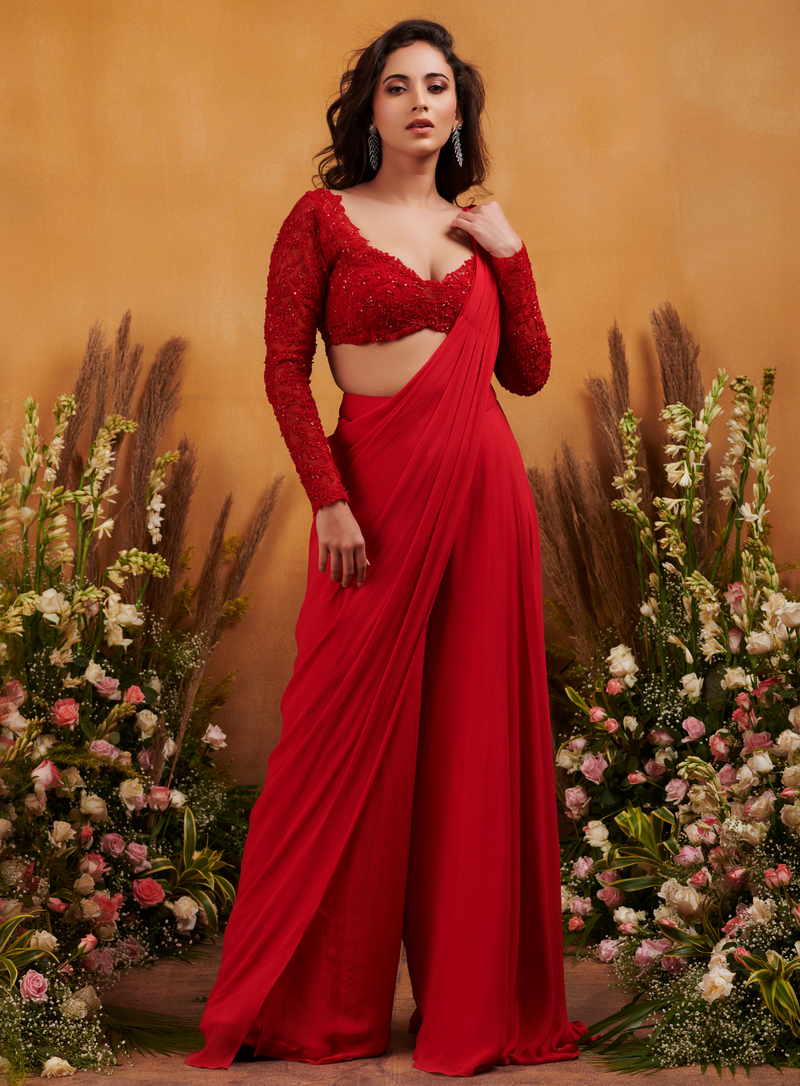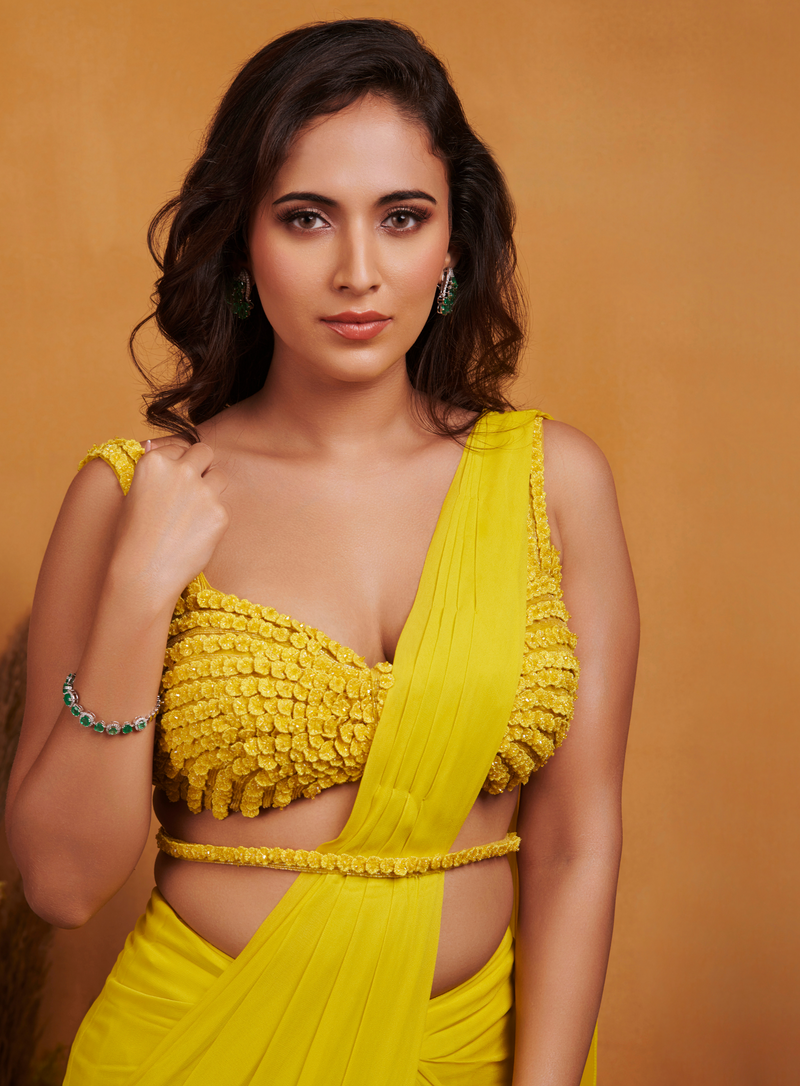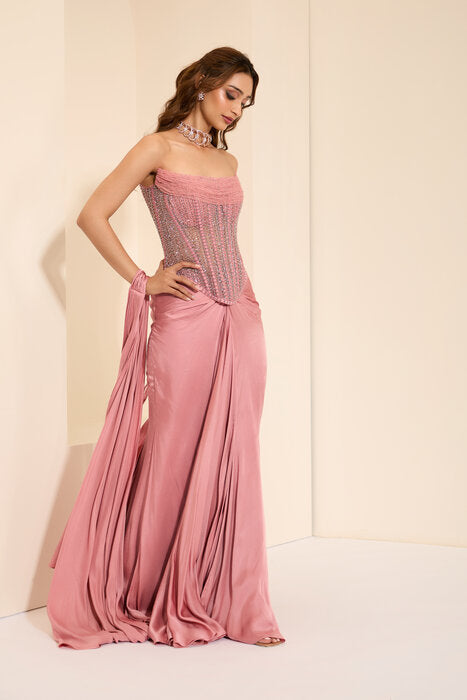
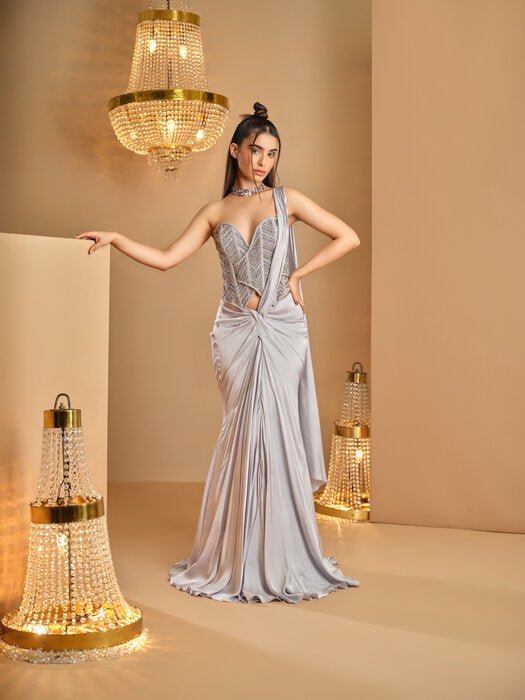
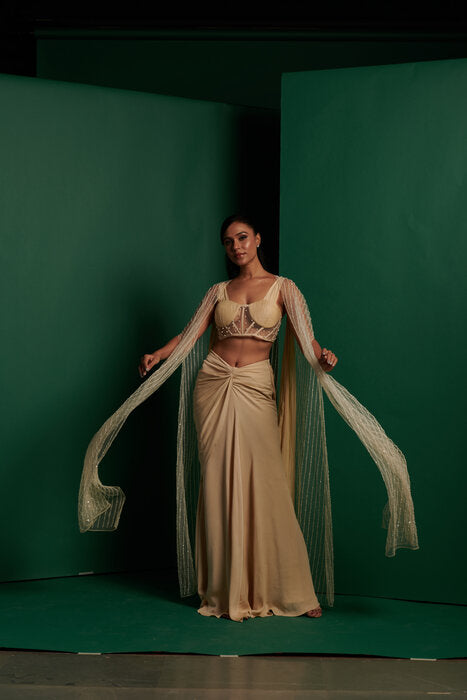
A traditional lehenga blouse is sewn to skim the body. A corset lehenga is built to shape it. That distinction — soft tailoring versus true structure — is the entire argument for why the corset lehenga has become one of the defining silhouettes in contemporary Indian bridal and occasion wear, and why it deserves to be understood on its own terms rather than treated as a trend variant of the blouse-and-skirt lehenga.
At K&A, the corset lehenga isn't a styling choice layered onto an existing garment. It's a different construction altogether, and it changes what the outfit does for the person wearing it.
What makes a lehenga a corset lehenga
A conventional lehenga blouse — however finely embroidered — is fabric cut and stitched to a body shape. It follows the wearer. A corset does the opposite: boning, structured lining, and a fitted silhouette hold their own shape and, in doing so, hold the wearer. The waist is defined with intention rather than suggestion. The bust and rib cage are supported, not just covered. What results is a line — shoulders set back, waist cinched, posture drawn upright — that a soft blouse simply cannot produce, no matter how much embellishment is added to compensate.
This is the difference buyers are usually reaching for when they search “corset lehenga vs traditional lehenga blouse” without quite having the vocabulary for it yet: it isn't about which one is more heavily worked, it's about which one is engineered. A corset is engineering. A blouse is drape. Both have their place, but for a bridal or reception look built to hold its shape across an entire evening — photographs, choreography, hours on your feet — structure earns its keep.
That's also why “corset lehenga online India” as a search phrase so often turns up disappointing results: a great deal of what's marketed under the name is a fitted blouse styled to look corset-adjacent, not a genuinely boned, structured corset paired with a lehenga skirt. The two are not interchangeable, and the gap between them shows the moment you put one on.
Why structure reads as a bridal statement
Bridal dressing is, among other things, a question of how a silhouette performs under attention — under camera flashes, under the specific choreography of a sangeet entrance, across the hours of a reception where a bride is on her feet, greeting, seated, dancing, photographed, in that order, on repeat. A soft blouse can shift and crease through all of that. A corset holds its line.
There's also a quieter argument for structure: it changes how a bride carries herself, not just how the outfit looks. A well-boned corset does some of the postural work for you — shoulders back, spine long — so the effect reads as composed rather than effortful. That's the version of “bold, structured, modern silhouette” K&A builds toward: not volume for its own sake, but a shape that holds up in real time, at a real event, for real hours.
Three corset lehengas, three different structural stories
Every corset lehenga in K&A's range is built around the same core idea — sculpted corset, considered skirt, hand-finished embellishment — but no two solve for it the same way. Here's how that plays out across three pieces currently live in the Lehengas edit.
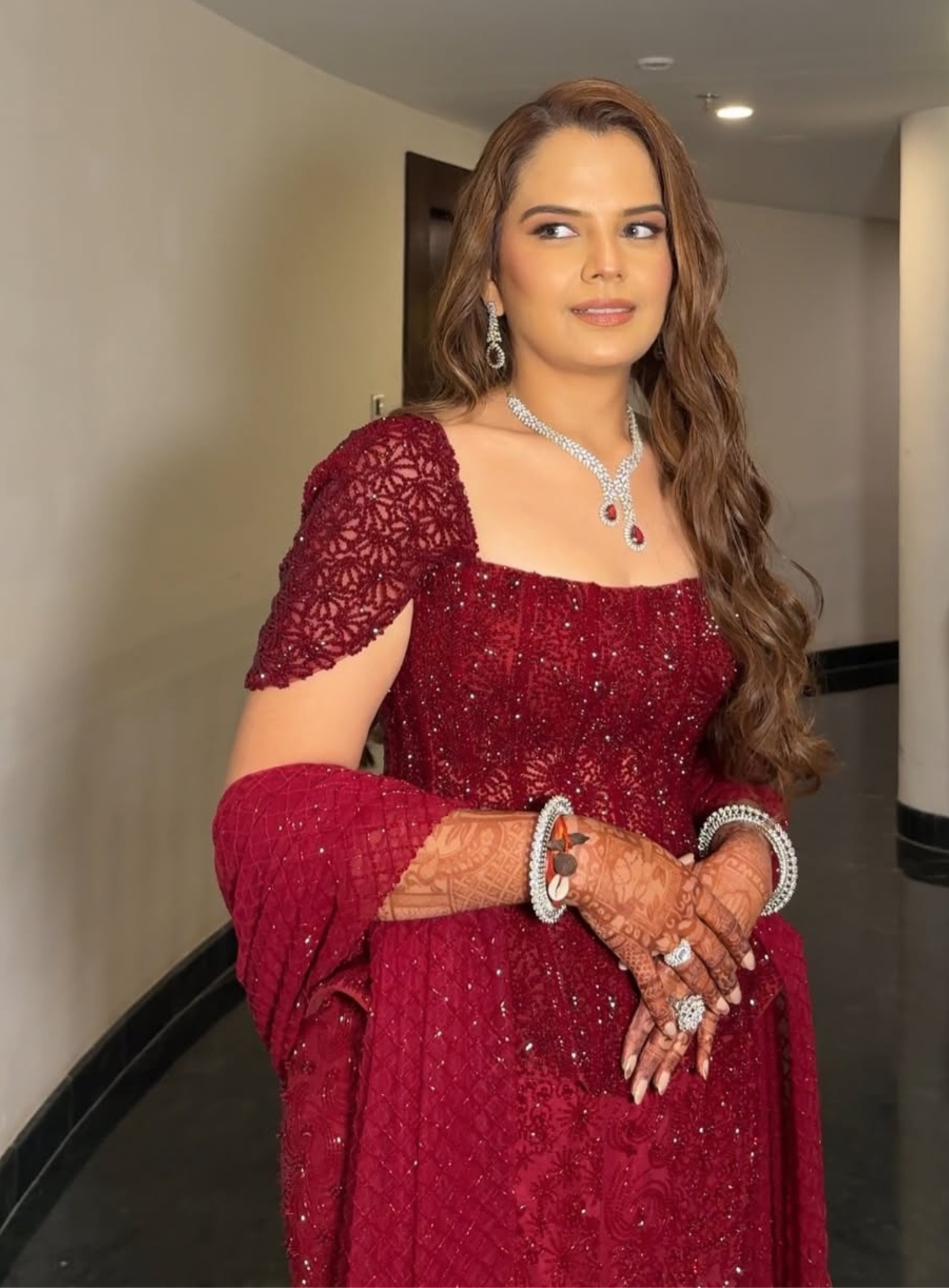
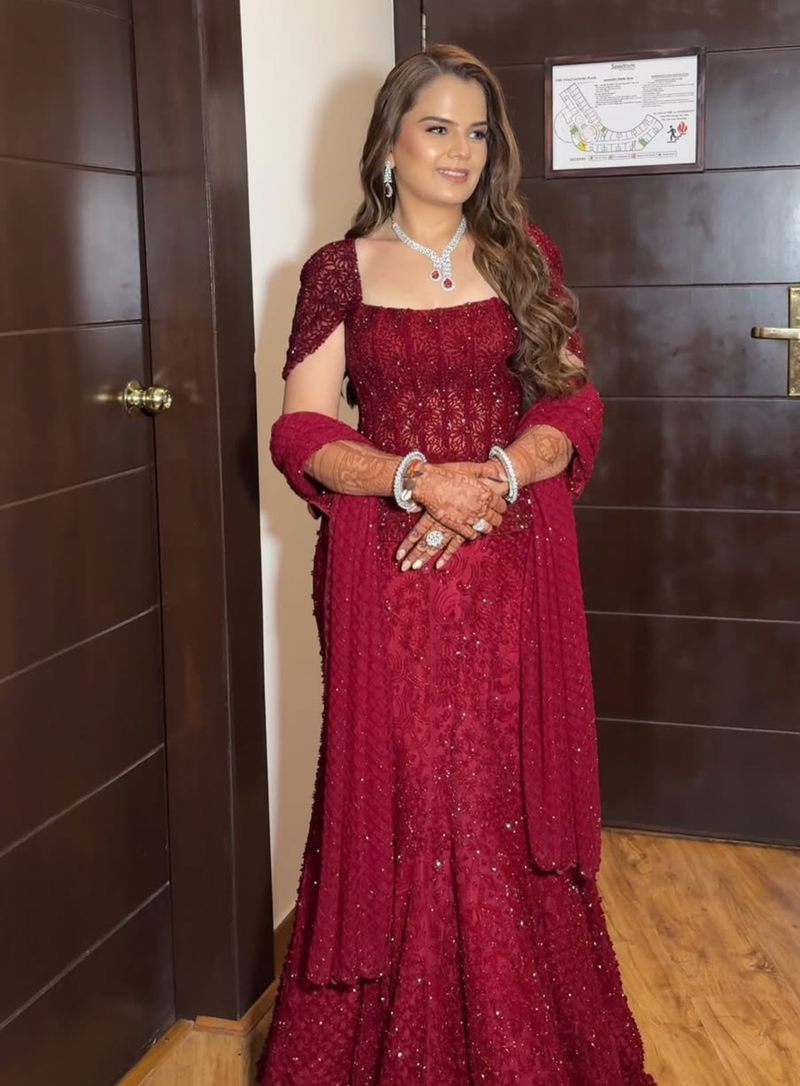
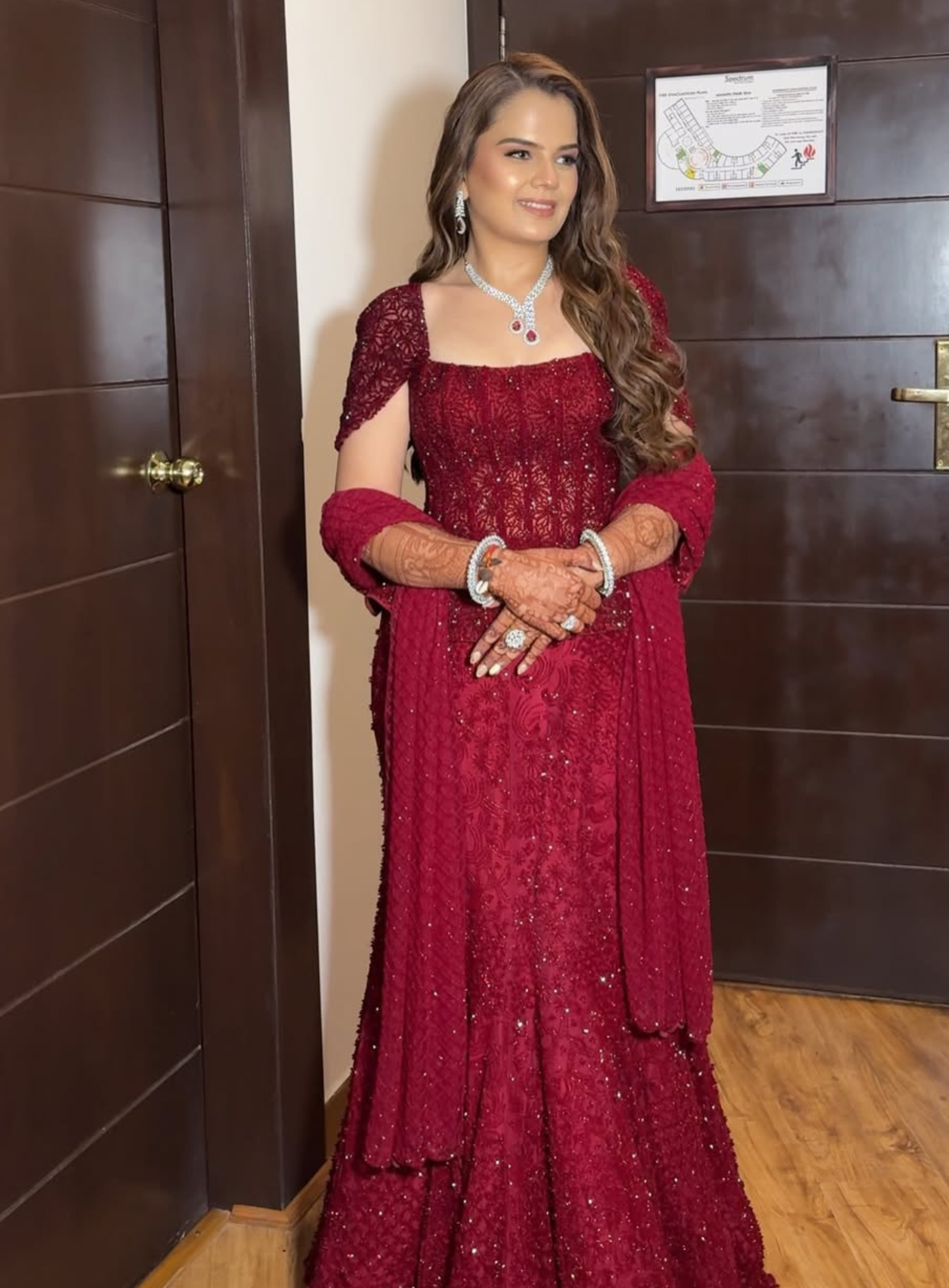
Maroon Embellished Corset With Fishcut Lehenga — ₹280,000. Deep maroon, hand-embroidered in cutdana and crystal, paired with a fishtail skirt that does the opposite of what the corset does above it — the bodice holds the line, the fishtail releases it, flaring out from the knee for movement the straight-cut skirts in this category don't have. The dupatta closes the look without softening the silhouette. This is the piece for a bride who wants the corset's structure read clearly through the top half and reserves the drama for how the skirt moves when she walks.
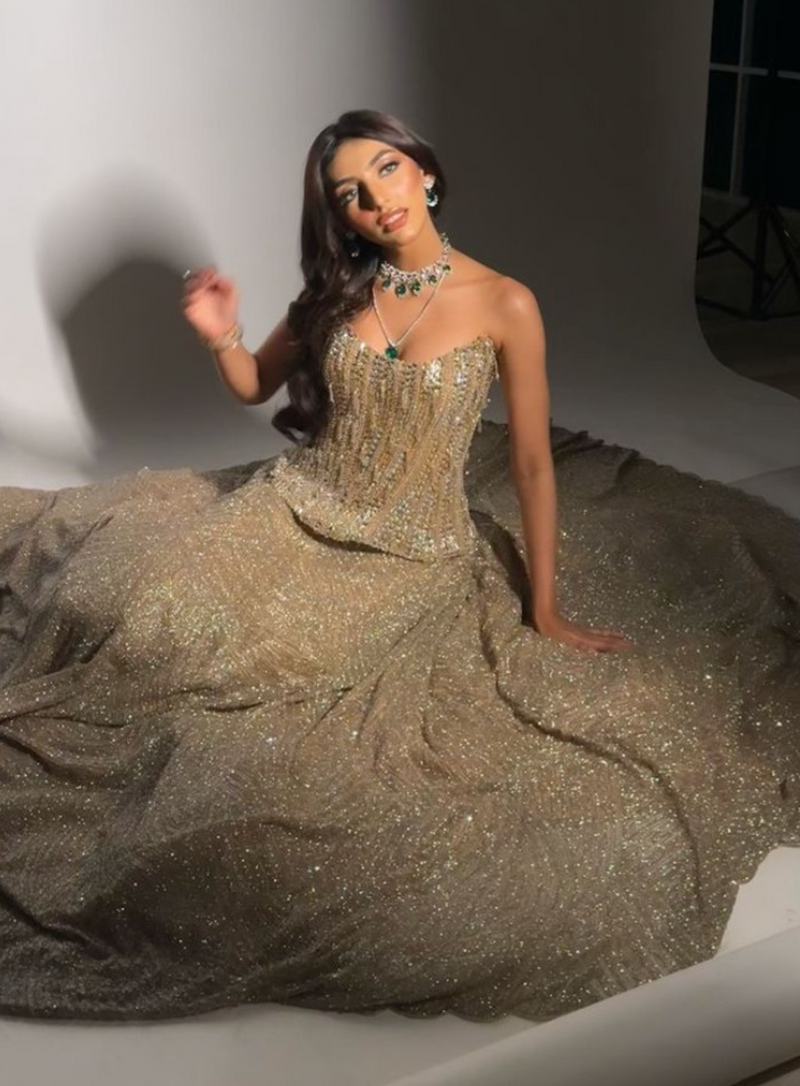
Stone Victorian Corset with Heavily Embellished Skirt & Dupatta — ₹250,000. Where the maroon piece contrasts a structured bodice against a fluid skirt, this one commits to embellishment as structure — glass beads and crystal worked densely enough across the corset and skirt that the weight and beadwork itself add body to the silhouette, alongside the boning. It's the more maximalist of the three, built for a wedding-day or reception moment that calls for the corset lehenga at its most fully worked.
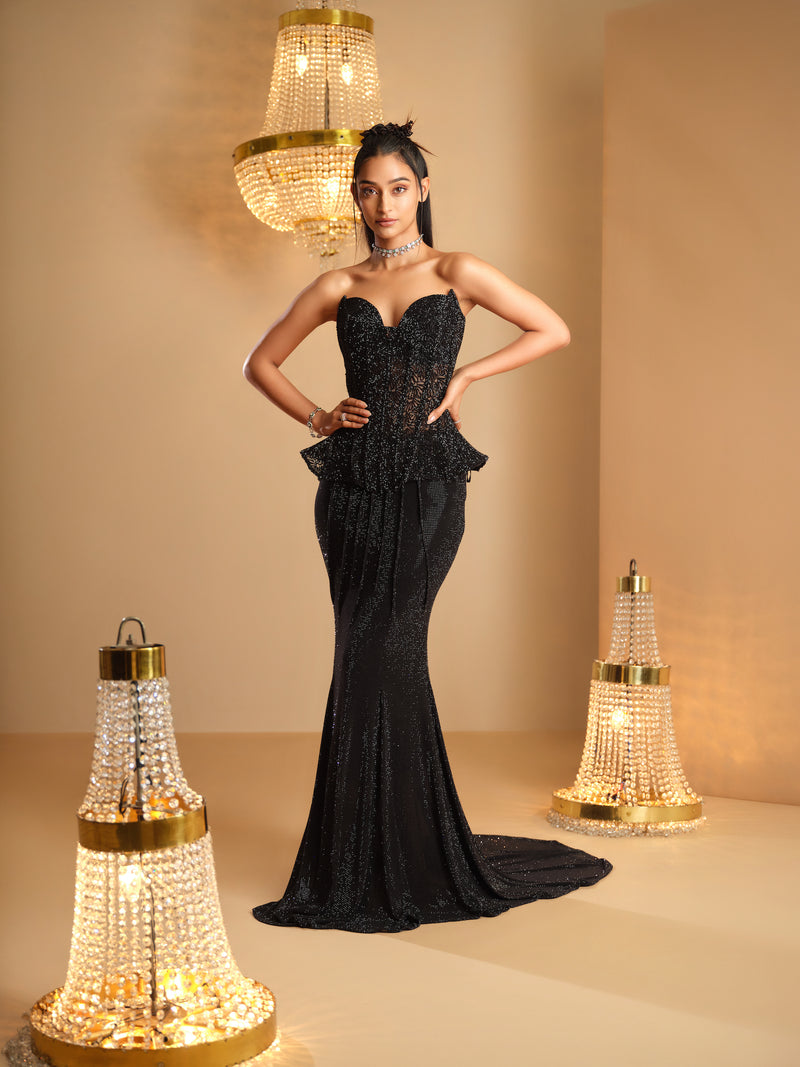
Mani Embellished Corset & Rhinestone Skirt — ₹140,000. A black corset embroidered in shimmering Japanese crystal, paired with a rhinestone skirt — the most evening-forward of the three, built for a cocktail or sangeet moment rather than the wedding day itself. The palette does the opposite of the maroon and stone pieces: instead of warmth and heavy embellishment, it leans into a sharper, more graphic edge, which is its own answer to what a corset lehenga can be outside the strictly bridal context.
Three pieces, three price points, three different reasons to choose a corset construction over a soft blouse — which is really the point. “Corset lehenga” isn't one look. It's a construction method that a designer can take in very different directions depending on skirt shape, embellishment density, and palette.
Choosing your corset lehenga
Because a corset does structural work a blouse doesn't, fit matters more here, not less. The right corset lehenga should feel supportive through the bodice without restricting how you move through an evening of standing, sitting, and dancing — which is exactly the kind of detail worth working through directly rather than guessing from measurements alone. If you're deciding between silhouettes, skirt shapes, or embellishment weight for your own event, get in touch to book a consult — it's a more useful starting point than trying to reverse-engineer fit from a product photo.
The full range of corset lehengas — beyond the three pieces above — is in K&A's Lehengas collection. For the complete edit of structured corsets across lehengas, drape sarees, and Indo-Western sets, see the Corsets collection.