“Structured corset” gets used loosely enough online that it's worth asking plainly: what does the word actually describe? Not a silhouette in the abstract, and not a marketing adjective attached to any fitted blouse. Structure is a construction method — a specific set of choices about boning, lining, and cut that determine whether a corset holds its own shape or simply follows the body underneath it. Understanding that distinction is the fastest way to tell a genuinely structured piece from one that only reads as one in a photograph.
At K&A, “structured” isn't a styling word. It's a build spec, and it shows up the same way whether the corset is anchoring a lehenga, a drape saree, or an Indo-Western bustier set.
Structure, defined
A structured corset is engineered to be self-supporting. Boning — rigid or semi-rigid strips built into internal channels — holds the bodice's shape independent of the body inside it. Structured lining reinforces the panels so they don't collapse or crease under movement. The cut itself is drafted to shape the waist, bust, and rib cage with intention, rather than being eased or gathered to follow whatever shape is already there.
That's the difference between a corset and a corset-style blouse. A corset-style blouse might borrow the visual cues — a fitted bodice, a defined waistline, maybe even a laced or hook-front closure — without any of the internal architecture that makes those cues functional rather than decorative. It looks structured in a still photograph and behaves like ordinary fitted fabric the moment someone sits, dances, or spends an evening in it. A genuinely structured corset holds its line regardless.
This is the vocabulary gap behind a search like “corset blouse construction”: people are trying to name what separates a corset from a blouse that merely resembles one, and the honest answer is boning, lining, and cut — not embellishment, not fit alone, and not price.
Structure isn't one silhouette — it's a construction principle applied across several
Because structure describes how a piece is built rather than what it is, the same principle shows up across very different silhouettes in K&A's range: corset lehengas, corset drape sarees, and corset-anchored Indo-Western sets. Each pairs a structured bodice with a different lower half, and each solves a different question about how that bodice should meet the rest of the outfit.
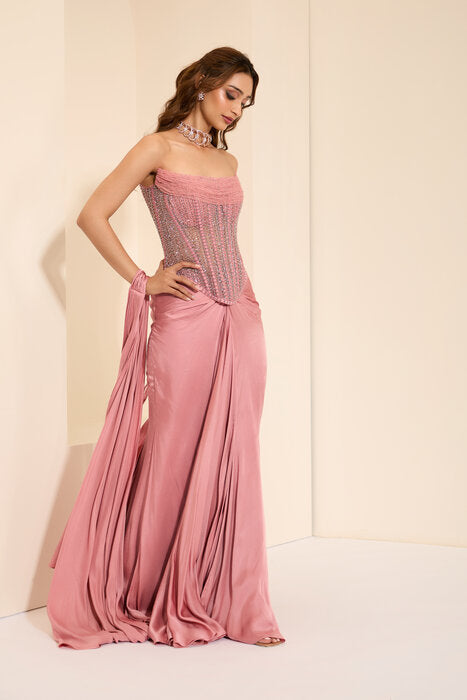
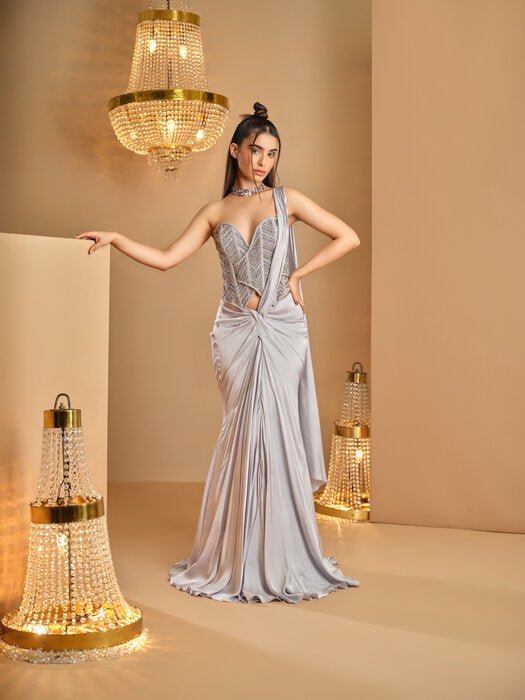
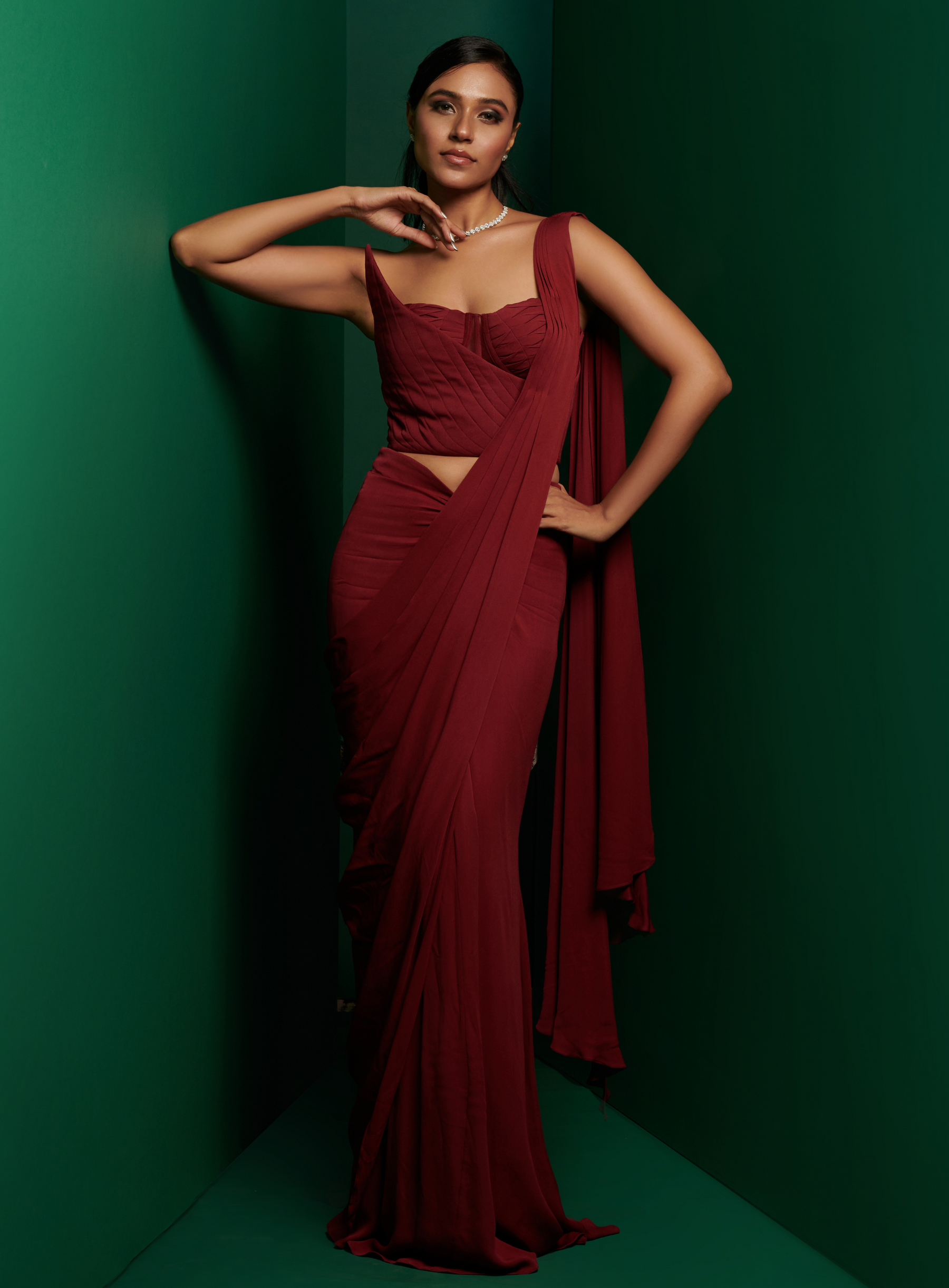
Corset drape sarees pair the structured bodice directly with a pre-draped saree skirt, so the corset does double duty — shaping the torso and also anchoring the drape, which in a traditional saree is usually held by the fabric's own weight and careful pleating rather than a built-in structural base. A few examples currently in K&A's Drapes collection show how much range that single principle covers:
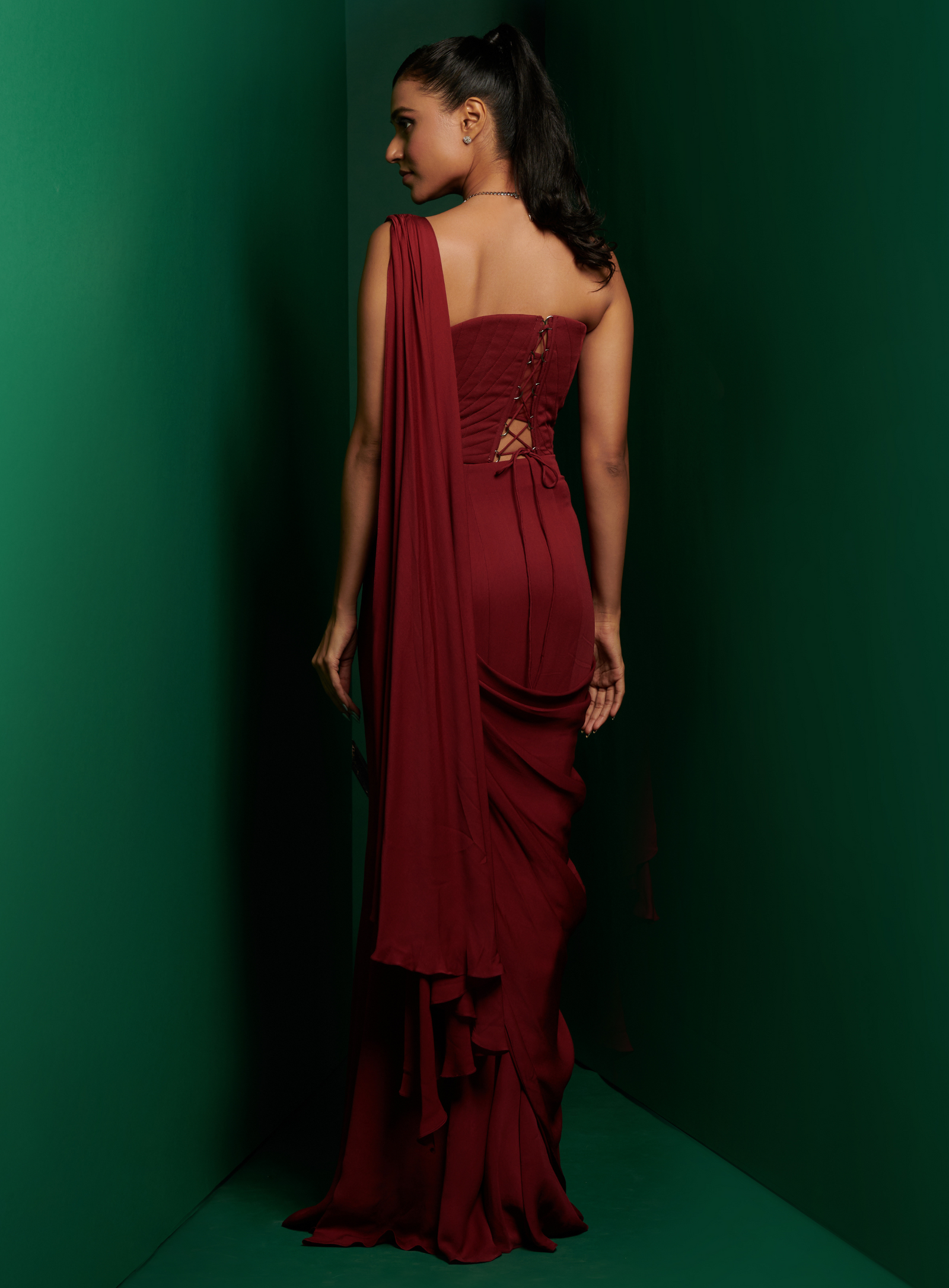
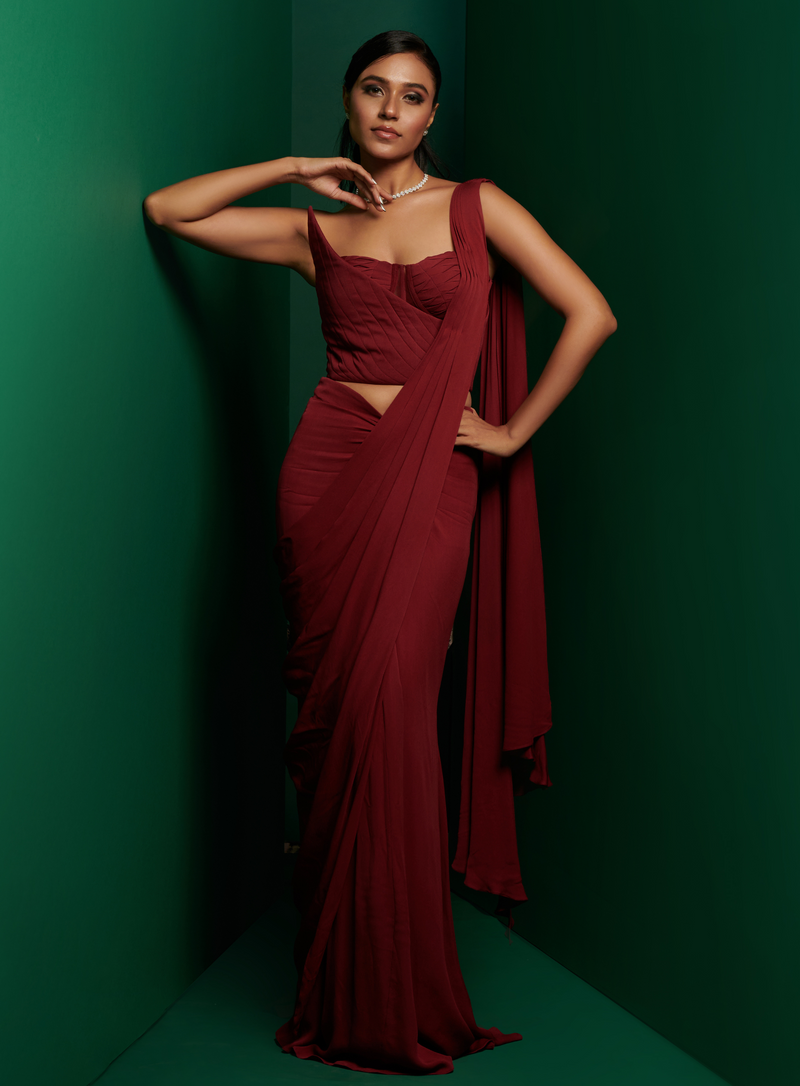
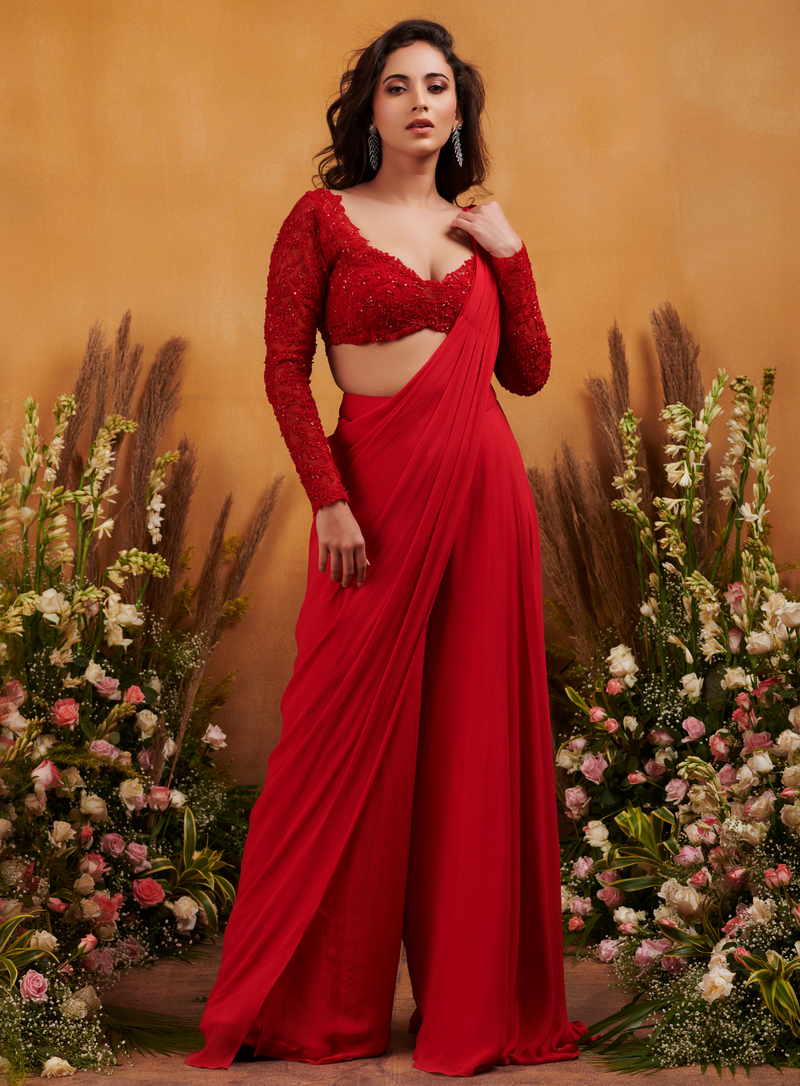
Wine Red Structured Double Corset With Elegant Skirt Drape Saree — ₹30,000. A sweetheart-neck corset built with double structuring, paired with a skirt and drape that fall from a fixed, supported base rather than being tucked and pinned into place the way an unstructured drape saree typically is. The wine-red colorway keeps the piece squarely in bridal-adjacent territory — sangeet or reception rather than the wedding day itself.
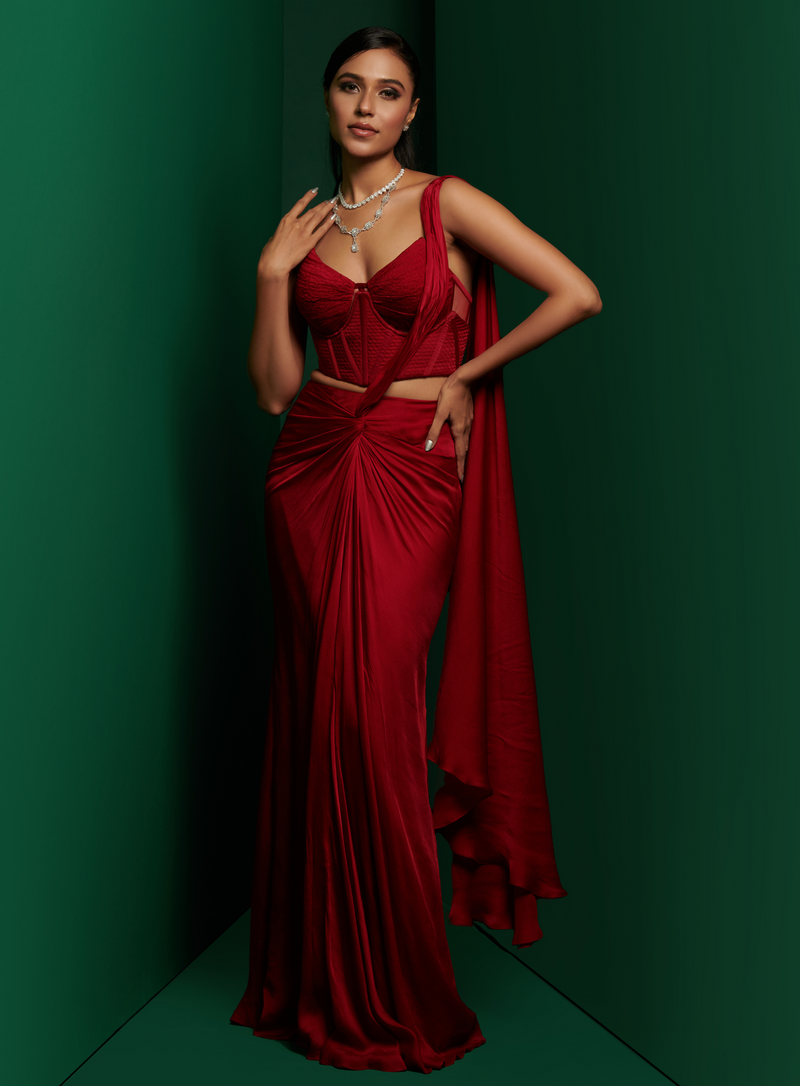
Cherry Red Structured Double Corset With Front Knot Skirt And Drape — ₹32,000. The same double-corset structuring, but the skirt finishes in a front knot rather than falling straight — a detail that only reads cleanly because the bodice above it is fixed and doesn't shift as the wearer moves. Take the structure out and the knot detail would be fighting the rest of the drape instead of framing it.
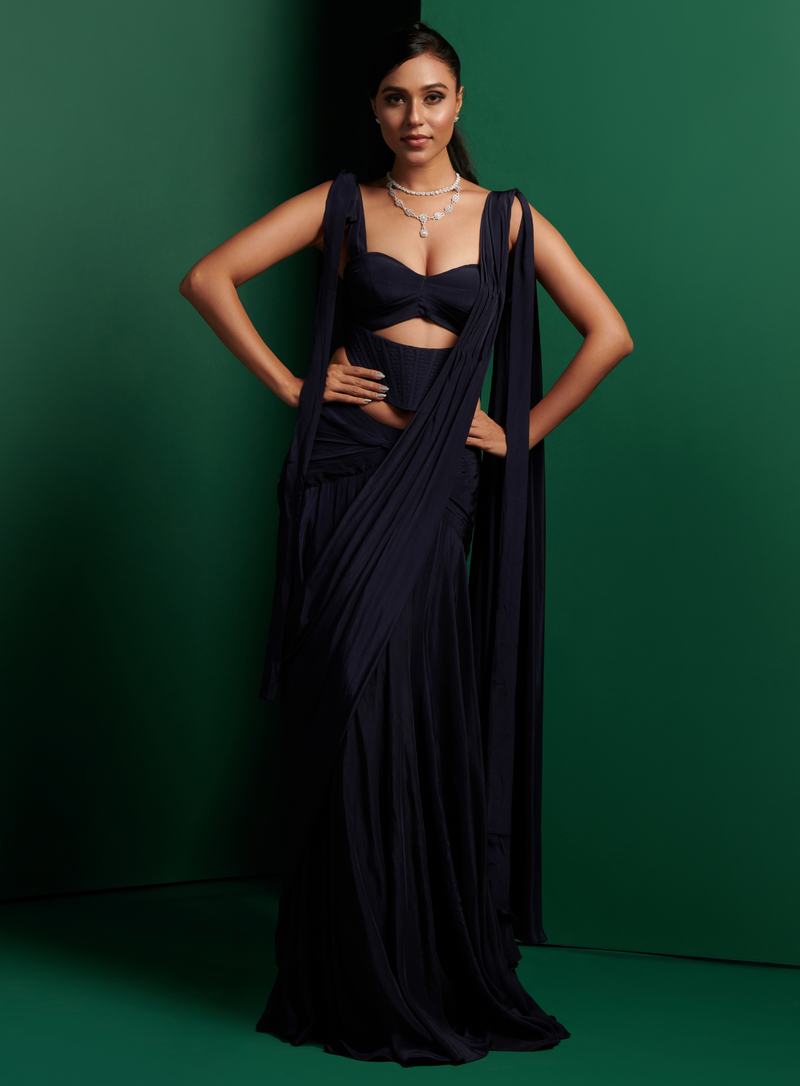
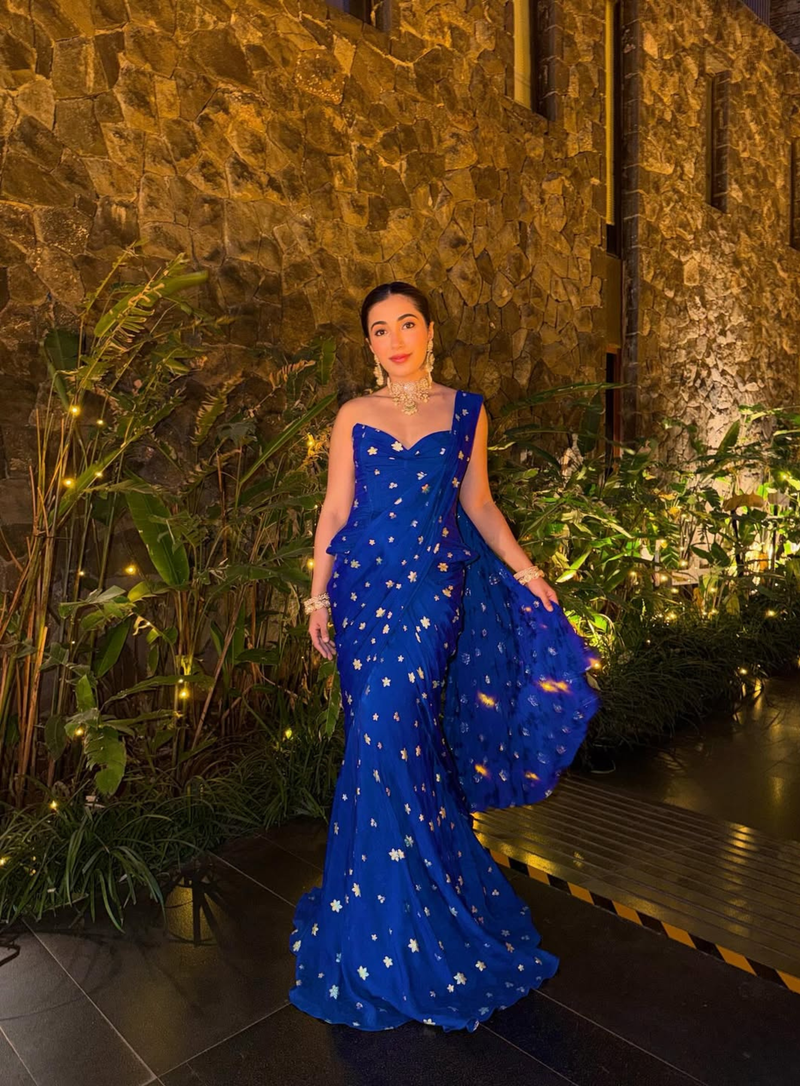
Midnight Blue Cut Out Corset With Gathered Skirt And Drape — ₹35,000. Here the corset itself is cut out rather than fully paneled — proof that structure and cut-out design aren't opposites. The boning and internal lining still do their job at the seams and edges that remain; the cut-out sections are a deliberate reduction of fabric, not a reduction of support. Paired with a gathered skirt for volume at the base.
Crimson Red Cut Out Corset With Pleated Drape Saree — ₹42,000. The most graphic of the four: cut-out panels set against a pleated drape, built for a wearer who wants the structural silhouette to read as sharp and architectural rather than softly bridal. It's a useful example of how far “structured” can flex stylistically while the underlying construction principle — boning, lining, defined cut — stays constant.
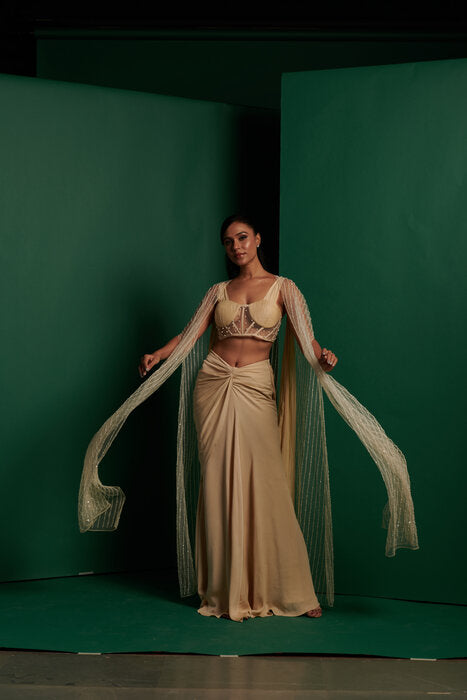
Corset-anchored Indo-Western sets apply the same structural logic to a completely different lower half — flared pants and a cape instead of a skirt or drape — which is worth knowing if “structured corset” turns up while you're actually comparing Indo-Western options rather than sarees or lehengas:
Antique Gold Metal Sequin Cut-Out Bustier With Embellished Cape And Flared Pants — ₹60,000. Built in double georgette and net, with the bustier finished in metal sequin dori hand work and a cut-out detail through the bodice. The cape and flared pants around it are fluid by design — which is precisely what makes the structured bustier at the center legible as structure: everything else in the outfit moves, and the bodice doesn't.
Black Pleated Bustier With Flared Pants And Embellished Cape — ₹48,000. Constructed in double georgette and organza, with a cape hand-embellished in glass beads and crystal. The pleating on the bustier itself is structural rather than purely decorative — it's shaping the bodice's line, not just adding surface texture, which is the same logic at work in every piece above it, just executed in black instead of a color story.
Corset saree vs. corset lehenga: the same construction, a different lower half
Because “corset saree vs corset lehenga” is one of the more common ways this question gets searched, it's worth answering directly: the corset itself — boning, lining, defined cut — doesn't change between the two. What changes is what it's paired with. A corset lehenga sets the structured bodice above a fitted-waist, often flared or fishtail skirt with its own separate construction; a corset drape saree sets it above a pre-draped saree silhouette, where the corset frequently takes over the anchoring work that pleating and tucking would otherwise do in an unstructured saree. Neither is “more structured” than the other — the corset is doing the same job in both. The choice comes down to how you want to wear the occasion: a lehenga's fuller, more traditional bridal silhouette, or a drape saree's leaner, more contemporary line. For a closer look at the lehenga side of that choice, specifically, K&A's piece on the corset lehenga as a bridal statement goes into that construction and three lehenga-specific examples in more detail.
Why the construction detail is worth asking about
None of this is an argument that structure is inherently better than a soft, draped silhouette — plenty of occasions call for exactly that ease. It's an argument for asking the right question when a corset piece is under consideration for a wedding-length event: not “does it look structured,” but “is it built that way.” Boning gauge, lining, and how a cut-out is engineered around the panels that remain all affect how a piece holds up across a full evening of standing, sitting, and dancing — and none of that is visible in a product photo the way embellishment is.
If you're weighing a corset drape saree against a corset lehenga, or comparing construction across pieces before a fitting, get in touch to book a consult — it's a more direct way to work through fit and structure than reading spec sheets alone.
The pieces above are drawn from K&A's Drapes collection and Indo Western collection, where the full range of structured corset construction — across sarees, jumpsuits, and bustier sets — is currently live. For every structured corset silhouette in one place — lehengas, drape sarees, and Indo-Western sets alike — see the Corsets collection.